Robotic and industrial perception
Photonics as a compact measurement layer in autonomous and industrial systems.
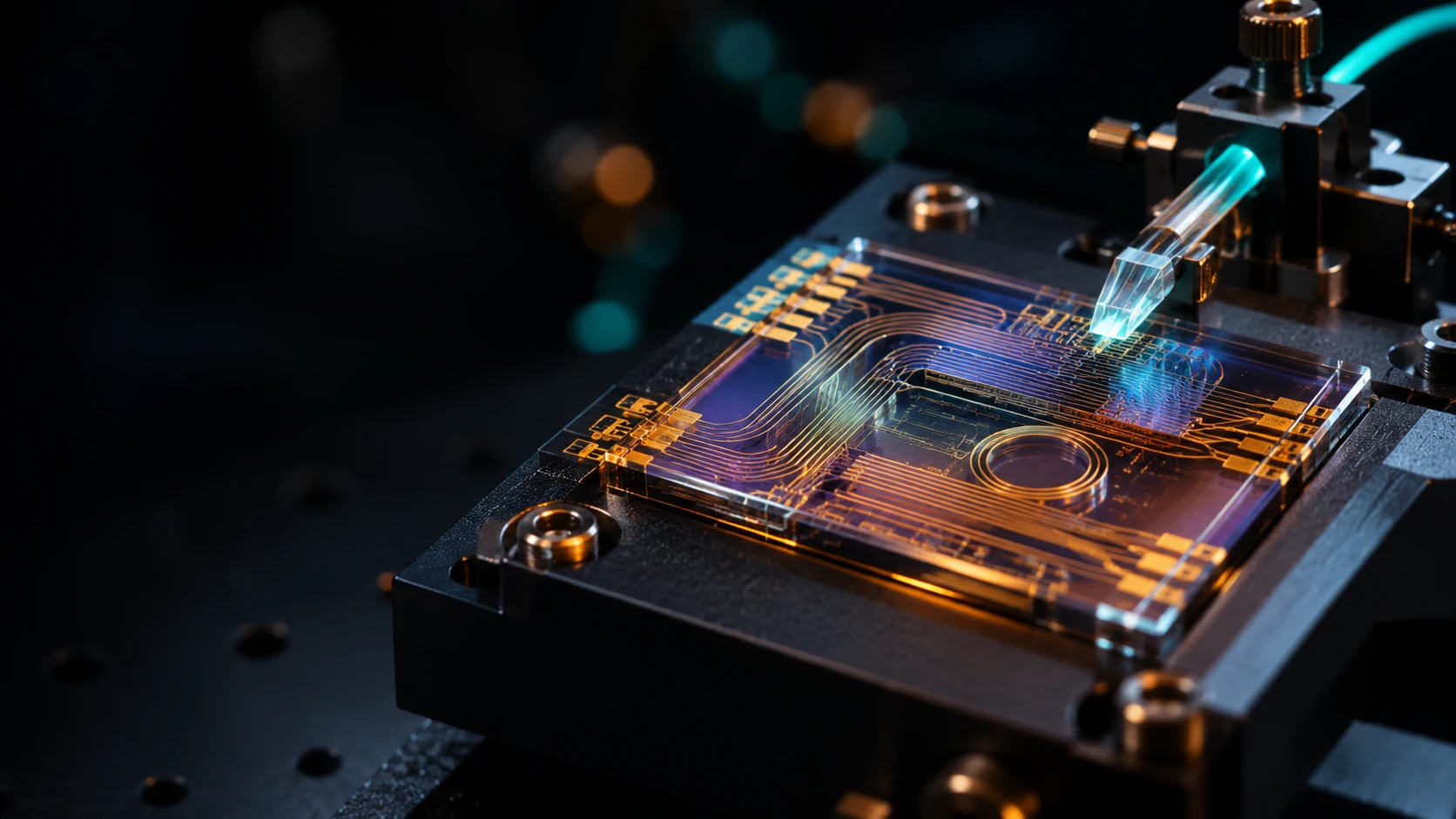
Why this frontier matters
Optical ranging and spectral sensing provide measurements that can complement cameras, inertial sensors and radar. System suitability depends on the environment and the safety case.
How the technology works
Time-of-flight, phase or frequency-modulated techniques estimate distance from returned light. Multi-sensor fusion combines outputs, confidence and calibration to form a robust perception system.
Where the technology fits
- Industrial metrology and automated inspection
- Robotic depth mapping and localization
- Machine-vision assistance for defect detection
Commercialization realities
Turning a technical function into a reliable product requires qualification, integration, operational evidence and an economic reason to adopt the system. A compelling physical mechanism is not, on its own, proof of market demand for a particular brand or domain.
- Scattering, fog, rain and sunlight can affect performance.
- Eye-safety classifications and certification matter.
- No individual sensing modality guarantees autonomy or safety.
A sensor’s laboratory resolution does not alone define perception safety. Reflective surfaces, rain, dust, ambient light, occlusion, calibration and software failure modes must be evaluated in the intended environment.
Selected technical reading
- NIST — Perception Performance of Robotic Systems
Measurement science and validation for robot sensors across lighting, geometry and application conditions.
- NIST — Terrestrial laser scanner performance review
Survey of laser-scanner errors, testing standards and metrological traceability.