Biophotonics and optical biosensing
Light-based detection and biochemical measurement, with carefully bounded clinical claims.
Why this frontier matters
Photonic sensors can read refractive-index changes, absorption, fluorescence or scattering from a sample. Their strength is selective optical measurement, not an automatic diagnosis.
How the technology works
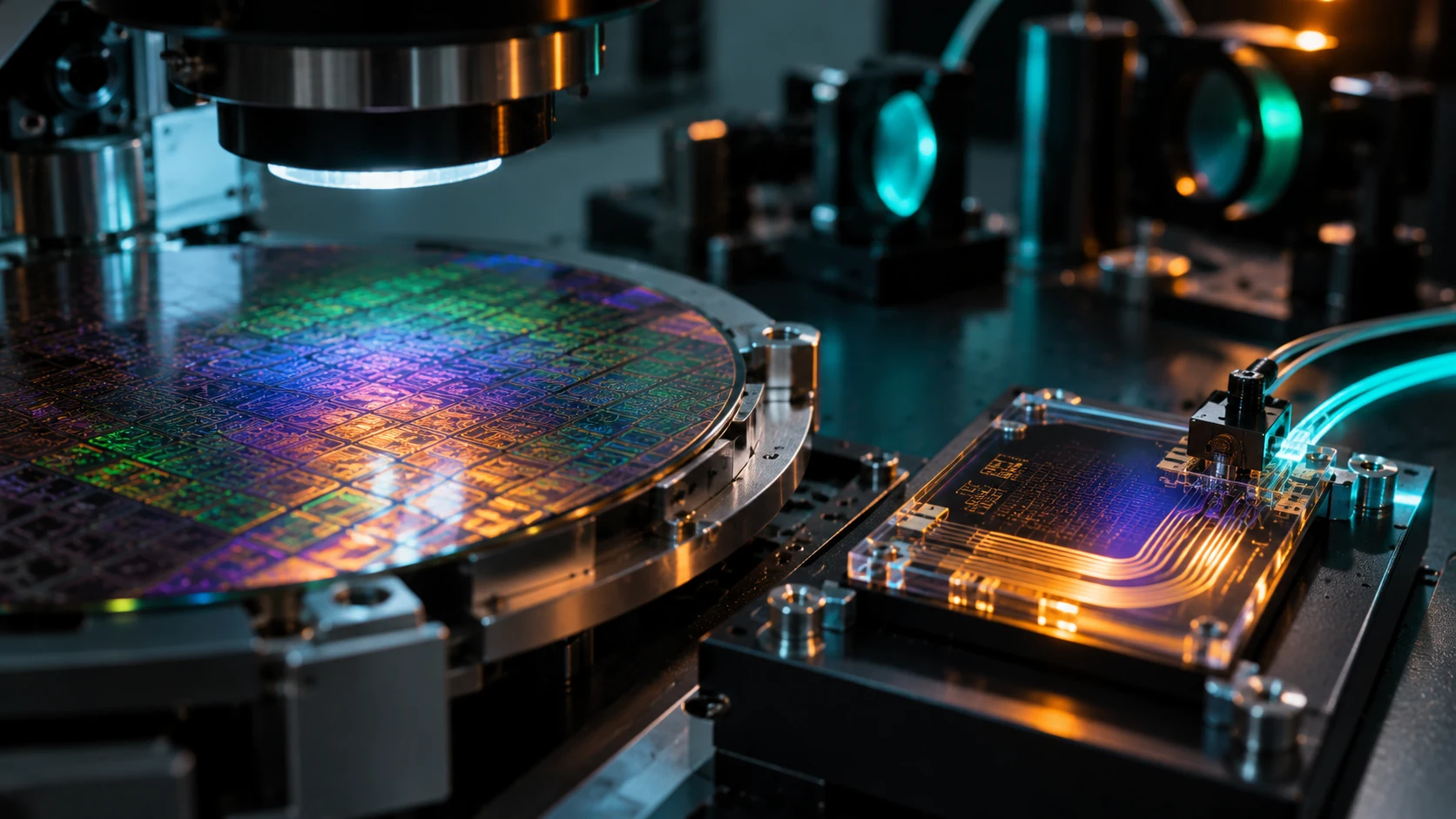
A biofunctionalized photonic surface or optical interaction region responds to material near it. Instrumentation tracks spectral shifts, intensity or phase changes and uses controls and calibration to interpret the measurement.
Where the technology fits
- Research-stage label-free molecular sensing
- Microfluidic laboratory analysis and screening
- Compact spectroscopy platforms for material and tissue studies
Commercialization realities
Turning a technical function into a reliable product requires qualification, integration, operational evidence and an economic reason to adopt the system. A compelling physical mechanism is not, on its own, proof of market demand for a particular brand or domain.
- Specificity in complex samples requires validation and controls.
- Clinical use requires suitable evidence, safety evaluation and regulatory approval.
- Fouling, sample handling and lot-to-lot reproducibility matter.
Sensitivity in buffer or an isolated sample does not establish clinical specificity. Matrix interference, sample preparation, calibration, clinical validation, repeatability and regulatory requirements remain central.
Selected technical reading
- NIST — Biophysical and Biomedical Measurement Group
NIST describes custom microfluidic chips, biosensors and measurement systems from molecules to tissues.
- NIST — Near-infrared fluorescence imaging calibration
Study of measurement geometry and calibrated tissue phantoms; relevant to trustworthy biomedical optical measurement.